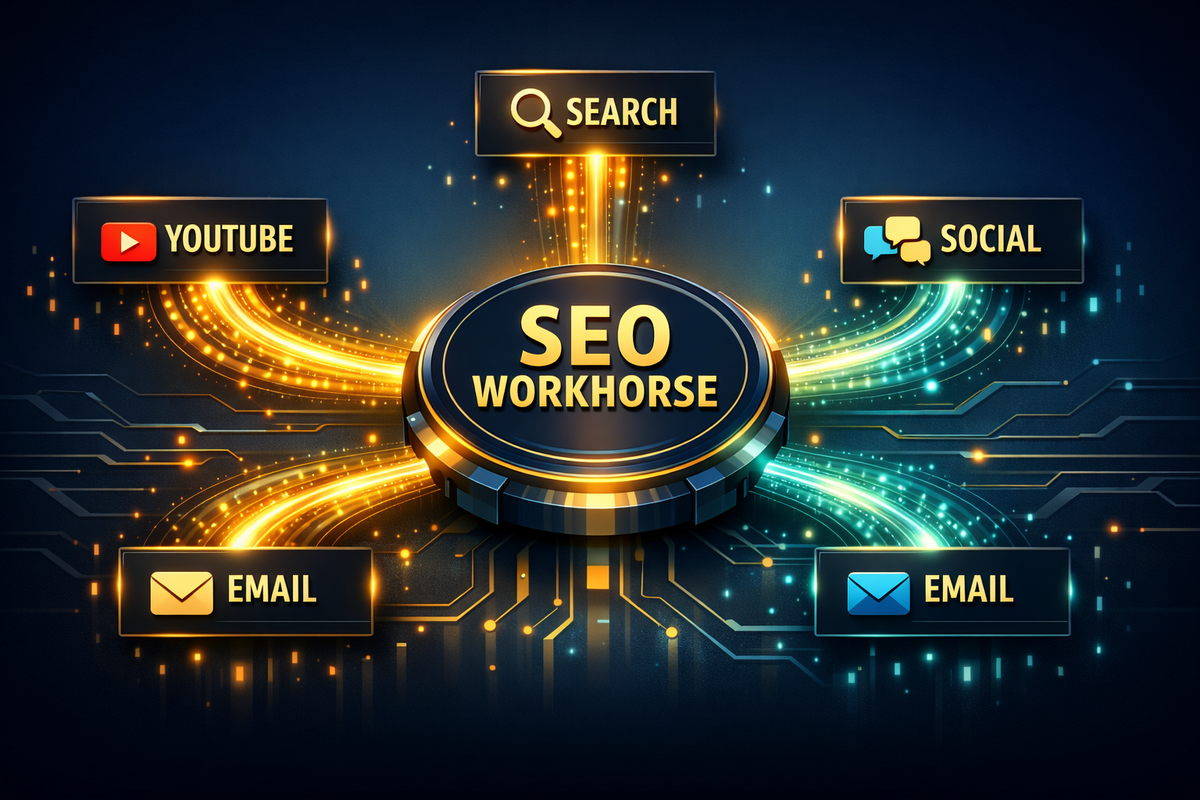
The digital marketing landscape is currently defined by the convergence of privacy-first measurement, generative AI saturation, and a radical shift toward interconnected customer journeys. The historical reliance on siloed channel management has been rendered obsolete by a more sophisticated requirement for cross-channel orchestration. At the heart of this evolution is the "SEO Workhorse" - a strategic framework that positions high-intent organic content not just as a traffic source, but as the foundational engine for personalized engagement across the entire marketing stack.
This cross-channel approach builds on the core PPC workhorse framework.
The Shift Toward Cross-Channel Orchestration
The distinction between multichannel and cross-channel marketing is fundamental to modern performance strategy. While multichannel marketing focuses on being present on multiple platforms independently, cross-channel marketing creates a seamless journey where each interaction informs the next. This shift is fueled by consumer expectations; approximately 73% of shoppers now expect brands to understand their specific needs across every touchpoint.
For the performance marketer, this means an initial engagement with an SEO-optimized blog post must trigger a series of coordinated events across email, social media, and paid search. This requires a unified data profile - a "single source of truth" - that aggregates behavior from web, mobile, and offline channels into an actionable profile. As ad blockers now impact over 40% of users in some markets, the ability to track and personalize experiences has moved toward server-side architectures, which maintain data integrity while respecting user privacy.
The SEO Workhorse: Content as Pipeline Infrastructure
In the current landscape, SEO content is no longer a top-of-funnel awareness tool; it is "pipeline infrastructure". B2B buyers increasingly prefer a rep-free experience, with over 60% beginning their journey via search and self-serving research before engaging with sales. The SEO workhorse - comprised of high-intent comparison pages and solution-oriented guides - performs the heavy lifting of qualification.
Metadata and Intent Mapping
Strategic intent mapping is the core of this process. Senior strategists prioritize "revenue-aligned" terms over high-volume generic keywords. These include "trigger event" topics and "best X for Y" queries that signal a readiness to convert.
For metadata, we focus on pixel-perfect optimization rather than just character counts. Title tags should ideally be 45-65 characters (580-600 pixels) and follow a Problem - Outcome - Category logic to attract qualified accounts. Meta descriptions, ranging from 120-155 characters (920 pixels), function as mini CTAs that match intent and provide clear next steps.
Humanizing Content to Satisfy E-E-A-T
As generative AI floods the internet with generic text, human-authored expertise has become a premium differentiator. Google’s emphasis on E-E-A-T (Experience, Expertise, Authoritativeness, and Trustworthiness) means that "workhorse" content must demonstrate firsthand knowledge that AI cannot replicate.
Effective humanization involves a multi-step workflow. It begins with manually rewriting introductions to establish a human voice, followed by injecting specific failed tests or first-person data. We use "Read-Aloud" tests to identify robotic symmetry or repetitive phrasing that detectors and human readers might flag. Content must be bold and punchy, expressing unique viewpoints that move beyond the bland neutrality of standard AI outputs.
Performance Max: The AI-Driven Discovery Engine
Google Ads Performance Max (PMax) is the primary vehicle for scaling cross-channel reach by automating bidding across Search, YouTube, and Display. To avoid the "black box" trap, we utilize "Audience Signals" to provide the AI with a head start. Integrating first-party data, such as Customer Match lists, allows the system to focus on users similar to the brand's best segments.
Asset groups within PMax must be thematic. Rather than a "one-size-fits-all" campaign, mature accounts utilize multiple groups segmented by product category or buyer persona. We deploy a mix of assets including up to 15 headlines (30 char), 5 long headlines (90 char), and high-resolution images (1200x628 min) to ensure the system has enough variety to optimize for different placements.
Technical Foundations: Server-Side GTM and CRM Precision
The efficacy of cross-channel strategy is contingent upon data accuracy. Traditional client-side tracking is insufficient due to browser restrictions and ITP (Intelligent Tracking Prevention) protocols. Server-side Google Tag Manager (sGTM) moves data processing to a secure, self-controlled server, establishing a first-party context that is far more resilient to ad blockers.
For lead-generation, integrating CRM data from platforms like HubSpot or Salesforce with GA4 is critical. By capturing the GA4 Client ID during the initial form submission and storing it in the CRM, we can link offline sales events - like "Closed Won" - back to the original digital touchpoints. This enables "Revenue-First" optimization, where campaigns are optimized for actual revenue outcomes rather than just lead volume.
The Ecommerce SEO Multiplier
In the ecommerce sector, the SEO Workhorse shifts from informational guides to high-performing product and category pages. Ecommerce SEO is no longer just about keyword density; it’s about technical clarity. By utilizing Schema.org markup for product availability, pricing, and reviews, we turn standard search results into "Rich Snippets" that dominate the SERP. When an ecommerce "Workhorse" page ranks high, it feeds the cross-channel engine by populating dynamic remarketing lists. A user who views a product via organic search but doesn't buy can be instantly re-engaged through Dynamic Remarketing ads that showcase the exact item they viewed, drastically shortening the path to purchase.
Technical Performance and Visual Optimization
Page speed and Core Web Vitals are primary ranking signals and conversion drivers. Since images can account for over 50% of a page's loading time, we prioritize technical management. Modern standards dictate the use of WebP and AVIF formats, which offer 25-50% better compression than legacy JPEG or PNG. We aim for main blog images to be under 100-200 KB while using the srcset attribute for responsiveness.
Closing the Loop: Social Media ROI
One of the most significant challenges in modern marketing is quantifying Social Media ROI. Within the SEO Workhorse framework, social media serves as a "velocity layer." High-quality organic traffic to your workhorse content provides the first-party data needed to build high-converting Lookalike Audiences on platforms like Meta and LinkedIn. By tracking "Assisted Conversions" in GA4, we can see how a social media interaction early in the journey—such as a user clicking a LinkedIn post—contributes to an eventual organic search conversion weeks later. This moves social media from an "awareness expense" to a measurable component of the revenue pipeline.
Orchestrating the Cross-Channel Journey
The true power of the SEO workhorse is realized through connected workflows:
- Content-to-Nurture Handoff: An organic visitor lands on a "workhorse" post and downloads a resource. Their data syncs with the CRM, triggering a personalized email sequence referencing the specific blog topics.
- Behavioral Social Retargeting: If an email subscriber views a pricing page but doesn't convert, they are automatically targeted with social proof ads on LinkedIn or Instagram.
- Search-to-Video Sequence: A user who engages with a high-intent search ad but doesn't convert is subsequently shown a "brand story" walkthrough on YouTube to reinforce the value proposition.
Strategic Synthesis
The integration of SEO workhorse content, Google Ads Performance Max, and technical attribution into a unified strategy represents the most effective path to scalability. By establishing a robust server-side measurement framework and a unified data profile, businesses can navigate the complexities of a privacy-first world while delivering the personalized experiences modern consumers demand. Success requires moving away from channel silos toward a "revenue operations" mindset where every touchpoint is quantified by its impact on the bottom line.
Frequently asked questions:
What is the SEO Workhorse process?
The SEO Workhorse process is a cross-channel framework that aligns organic search strategy with paid media and social ROI to create a self-sustaining growth loop.
How does this workflow increase conversions?
By personalizing the user journey across multiple touchpoints, the workflow ensures that high-intent search traffic is nurtured through specialized landing pages designed for "First Time Deposits" and lead gen.
Can I use this for Ecommerce SEO?
Yes. The strategy specifically addresses how to scale ecommerce visibility by combining technical SEO "workhorses" with aggressive cross-channel remarketing.