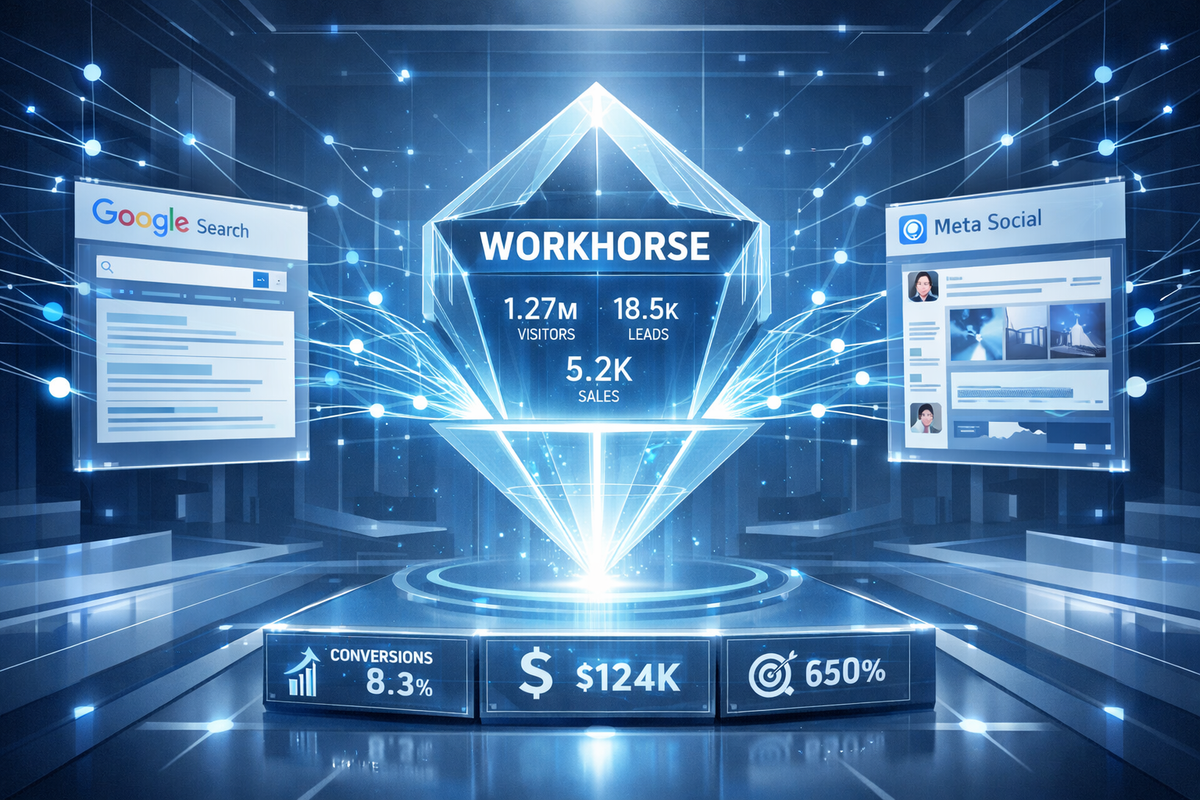
The digital marketing ecosystem in 2026 is characterized by a fundamental shift from tactical execution to architectural orchestration. As privacy regulations, the erosion of third-party cookies, and the rise of artificial intelligence redefine the search and social landscapes, the "PPC Workhorse" has emerged as the definitive framework for sustainable growth. At its core, the Workhorse is not merely a high-performing landing page or a singular ad campaign; it is a cross-channel conversion engine designed to capture expensive traffic from Google and Meta and transform it into a source of long-term competitive advantage. For agencies and internal marketing teams, the objective is to build a system where paid marketing does not exist in a vacuum but serves as the experimental laboratory for organic authority, effectively lowering the blended Customer Acquisition Cost (CAC) across the entire enterprise.
The Conceptual Evolution of the Paid Marketing Workhorse
The genesis of the Workhorse concept lies in the realization that traditional landing pages often fail to justify the escalating costs of Tier 1 auction environments. In high-intent categories, where cost-per-click (CPC) rates can exceed significant thresholds, sending traffic to a generic homepage or a broad service page is economically non-viable. The Workhorse model solves this by creating a highly focused, distraction-free environment tailored to the specific searcher intent identified in the ad. This is more than a conversion rate optimization (CRO) tactic; it is a strategic maneuver to improve the Google Quality Score and Meta's ad relevance signals, thereby reducing the "tax" paid to advertising platforms.
The synergy between the Workhorse and the broader marketing funnel is foundational. A well-constructed Workhorse page serves as a data-gathering hub, providing the raw search term intelligence required to fuel a robust search engine optimization (SEO) strategy. By identifying which specific queries result in actual revenue rather than just clicks, the Workhorse allows the strategist to map out topic clusters with mathematical precision, ensuring that the content production team focuses on terms with the highest business value.
Economic Mechanics and the Strategic Reduction of CAC
In the current fiscal climate, the viability of a business is increasingly tied to its efficiency in acquiring customers relative to the revenue those customers generate over their lifetime. The relationship between Customer Acquisition Cost (CAC) and Customer Lifetime Value (LTV) is the primary indicator of a "money-burning machine" versus a sustainable business. The PPC Workhorse functions as a primary lever for improving this ratio by optimizing the bottom of the funnel, which in turn permits higher aggressive bidding at the top.
The Quantitative Foundations of Acquisition
To assess the performance of a Workhorse system, the following formula for CAC must be applied across every channel individually to avoid the pitfalls of "reporting noise" or "average CAC" fallacies :
Industry benchmarks for 2026 suggest that a healthy SaaS or e-commerce business should target an $LTV:CAC$ ratio of $3:1$ or higher. If the ratio falls below this threshold, the analysis indicates that either the targeting is misaligned, the landing page is failing to convert, or the churn rate is unsustainably high.
Blended CAC and Channel Dynamics
A strategic PPC Workhorse does not merely lower its own channel-specific CAC; it lowers the "blended" CAC by improving the efficiency of the entire multi-touch journey. Because most customers convert on the second or tenth touchpoint, a Workhorse system that captures a lead early and feeds a retargeting sequence on Meta or email provides a more efficient path to conversion than repeated high-intent search bidding.
| Channel Category | Role | Acquisition Speed | Relative Cost (2026) |
|---|---|---|---|
| Google Search (Alpha) | High-Intent Capture | High | High |
| Google Search (Beta) | Intent Discovery | Medium | Moderate |
| Meta Content-First | Audience Building | Medium | Low |
| SEO (Organic) | Authority Moat | Low | Very Low |
Note: Data reflects a synthesis of multi-channel performance trends observed in the 2026 landscape.
Engineering the High-Conversion Landing Page
The physical manifestation of the PPC Workhorse is the landing page. In 2026, the architecture of these pages has evolved beyond basic headers and forms to include psychological triggers and AI-readable data structures. The goal of the Workhorse page is to reduce the friction between the user's problem and the brand's solution.
Conversions start with the right page - see our landing page optimization guide.
Core Architectural Elements
High-converting pages consistently follow a proven structure that prioritizes simplicity over creative vanity.
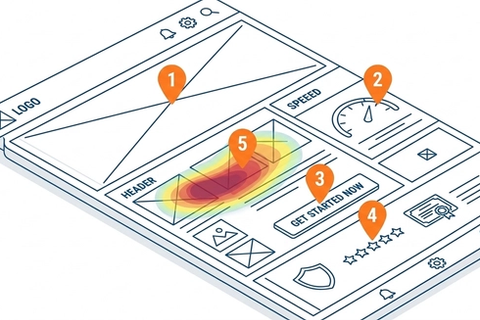
- Headline and Message Match: The headline must explicitly reinforce the promise made in the ad copy. If an ad promises a "breakthrough meditation system," the landing page must feature those exact words prominently.
- Visual Hierarchy and Hero Sections: The hero shot—the primary imagery above the fold—should demonstrate the product in context, helping the user visualize the benefit of the service.
- The Single Call to Action (CTA): A Workhorse page has one, and only one, desired action. Removing primary site navigation and secondary links prevents the user from leaking out of the funnel before the conversion occurs.
- Social Proof and Trust Indicators: Authentic customer testimonials, recognizable client logos, and case studies build the necessary credibility to overcome the "skepticism barrier" of paid traffic.
Video Integration and Multimodal Engagement
By 2026, video content has become a non-negotiable component of the Workhorse architecture. Evidence suggests that landing pages featuring video can increase conversions by as much as 80%. Effective formats include 30-60 second explainer animations, customer success stories, and problem-solution hooks designed to grab attention within the first three seconds. To support AI search summaries, these videos should be accompanied by transcripts and schema markup.
Designing for AI and Search Generative Experience (SGE)
A significant trend in 2026 is the "AI-ready" landing page. Google’s search algorithms and Large Language Models (LLMs) now prioritize identity and structure over keyword density. The first 200 words of a Workhorse page must clearly define who the company is, what they offer, and where they operate to ensure the content is usable in AI-generated answers.
| Feature | Standard Landing Page | PPC Workhorse Page (2026) |
|---|---|---|
| Primary Goal | Brand Education | Single-Action Conversion |
| Navigation | Full Site Menu | No Navigation (Distraction-Free) |
| Copy Strategy | Broad Keywords | Specific Search Intent Match |
| Trust Signal | Generic Review Count | Specific Testimonials + Case Studies |
| Technical Priority | Basic SEO | Speed (Under 3s) + AI Structured Data |
Architecture designed to satisfy both human intent and AI extraction requirements.
The Google Ads Workhorse: Advanced Structural Frameworks
The structural design of a Google Ads account is the primary determinant of its ability to scale profitably. The original Alpha/Beta framework has been refined into a multi-tiered approach that balances human control with machine learning.
The Alpha/Beta Structural Paradigm
The Alpha/Beta model, pioneered by 3Q Digital, creates a hierarchy that funnels the best traffic to the most targeted ads.
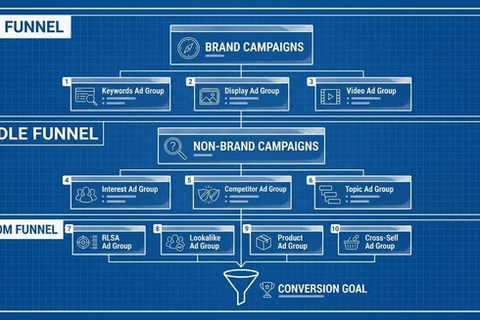
- Alpha Campaigns (The Profits): These campaigns consist of "known winners"—keywords that have historically driven conversions at a profitable CPA. They are housed in Single Keyword Ad Groups (SKAGs) using Exact Match. This allows the marketer to customize the ad copy and landing page for that specific term, maximizing relevance and Quality Score.
- Beta Campaigns (The Laboratory): These are discovery campaigns that use Phrase Match or Broad Match Modified (where still available) to identify new queries. Crucially, the Alpha keywords are added as exact match negatives to the Beta campaign, forcing the traffic into the precision-bid Alpha groups while letting the Beta groups explore the "long tail".
Expanding the Hierarchy: Gamma and Delta Strategies
As Google has leaned more heavily into automation, advanced strategists have added two additional tiers to the Alpha/Beta model: Gamma and Delta.
- Gamma Strategy: These campaigns use true Broad Match to cast the widest net possible. They are typically deployed only after Alpha and Beta campaigns have hit their performance goals. Gamma campaigns rely on smart bidding (tCPA/tROAS) and are used to "fuel" the discovery of terms that even Phrase Match might miss.
- Delta Strategy: These campaigns utilize Dynamic Search Ads (DSA) and Performance Max (PMax) layers. Delta campaigns use the power of Google's AI to match site content to queries without any manual keyword input. This is particularly effective for finding conversational queries and voice searches that traditional keyword research cannot predict.
Strategic Search Term Harvesting
The core of the "Workhorse" synergy is the extraction of data from the search terms report. Analyzing this report allows the team to identify keywords that are "good but not great," terms eating the budget without converting, and most importantly, "Information Gain" queries that can be used to build SEO topic clusters.
| Tier | Campaign Name | Match Type | Primary Objective |
|---|---|---|---|
| 1 | Alpha | Exact | Maximizing Profit/ROI |
| 2 | Beta | Phrase | Finding "Hot" New Terms |
| 3 | Gamma | Broad | Scaling Volume via Smart Bidding |
| 4 | Delta | Dynamic | Machine-Driven Discovery |
The four-tiered structure designed for maximum account resilience and discovery.
Cross-Channel Synergy: Transforming Paid Data into Organic Dominance
The Workhorse isn't just a conversion tool; it is an intelligence engine for the SEO team. Traditional SEO keyword research is often based on volume and difficulty estimates that may not correlate with business revenue. The PPC Workhorse eliminates this uncertainty by providing empirical proof of which queries convert.
Building SEO Topic Clusters from PPC Search Terms
When a search term in the Beta or Gamma campaign shows a consistent conversion rate, it indicates a profitable "intent cluster". The SEO manager then takes these terms and maps them into a "Pillar and Cluster" architecture.
- The Pillar Page: A high-value, long-form page covering a broad topic (e.g., "Customer Acquisition Strategy"). This page targets the high-volume head terms discovered in PPC.
- Cluster Pages (Spokes): Shorter, focused articles that address specific questions or sub-topics identified in the PPC search term report (e.g., "How to calculate customer acquisition cost"). These pages link back to the pillar page, signaling topical authority to search engines.
Automating the Harvesting Process with BigQuery and SQL
In 2026, the manual export of search term reports is being replaced by automated data pipelines. By connecting Google Ads, Google Search Console, and Google Analytics 4 (GA4) to BigQuery, teams can automate the identification of the most valuable organic keyword opportunities.
A standard SQL analysis might join these datasets on the landing page URL to identify pages where PPC conversion rates are high but organic visibility is low, indicating a prime opportunity for content investment. This "SQLify Your SEO" approach ensures that the content team is never working in the dark, but is always prioritizing pages with a proven ability to drive sales.
The Meta Workhorse: Content-First and Low-Cost Audience Building
While Google is a intent-capture platform, Meta remains a demand-generation platform. The "Workhorse" on Meta is built around "Content-First" ads designed to identify and educate potential customers at a fraction of the cost of traditional direct-response advertising.
The ThruPlay and Engagement Strategy
Instead of trying to force a conversion on the first touchpoint, the Meta Workhorse uses educational video content to build retargeting pools.
- The Hook: A high-value video (explainer, UGC, or founder story) is promoted using the "Video Views" or "Engagement" objective. This typically yields significantly lower CPMs than "Sales" or "Conversions" objectives.
- The Retargeting Pool: The strategist builds a custom audience of users who have watched at least 50% or 75% of the video. These users have demonstrated "passive intent" and are now "warm" leads.
- The Workhorse Conversion: These warm leads are then funneled into a direct-response ad that leads to the PPC Workhorse landing page. Because the user is already familiar with the brand, the conversion rate is often 2-3x higher than cold traffic conversion rates.
Benchmarking Social Media Ad Performance (2025–2026)
The landscape of social advertising continues to evolve, with Instagram and TikTok competing for attention while Facebook remains the bedrock for lead generation and B2B reach.
| Metric | Facebook (2026 Proj.) | Instagram (2026 Proj.) | TikTok (2026 Proj.) |
|---|---|---|---|
| Average CTR | 1.49% – 1.70% | 0.22% – 0.88% | High Engagement |
| Average CPC | $0.78 – $1.72 | $1.83 – $3.35 | $0.68 – $1.00 |
| Average CPM | $7.47 – $8.74 | $6.25 – $7.68 | $4.00 – $7.00 |
| Average CVR | 8.20% (Lead Ads) | Passive Discovery | Variable |
Note: Data derived from 2025/2026 industry benchmarks and competitive landscape analysis.
Creative Diversity as a Performance Metric
In 2026, Meta’s "Andromeda" algorithm rewards radical creative variation. Advertisers who test multiple archetypes—such as lo-fi UGC, high-production cinematic stories, and meme-style comparisons—see better CPM efficiency than those who simply iterate on the same visual style. The creative is no longer just "the message"; it is the primary targeting mechanism in a world with limited behavioral signals.
2026 Trends: From Automation to Agentic Marketing
The year 2026 marks the transition from "Assisted AI" to "Agentic AI" in paid marketing operations. The PPC Workhorse is now managed by autonomous agents capable of navigating complex workflows with minimal human intervention.
The Rise of Agentic Workflows
An agentic workflow goes beyond a simple prompt; it is a dynamic system that can perceive, plan, act, and learn. For a PPC manager, this means deploying specialized digital teammates for specific funnel tasks.
- Strategic Signal Architecture: Marketers are shifting from manual bid adjustments to "architecting signals"—ensuring the AI receives high-fidelity conversion data (e.g., qualified lead vs. simple form fill) so it can optimize for real business outcomes.
- Prompt Engineering (RTF and CREATE): Effective collaboration with AI agents requires structured instructions. The CREATE framework (Character, Request, Examples, Adjustments, Type of Output, Evaluation) is used to generate high-quality strategic briefs and creative concepts.
- The Agentic Web: As AI assistants (e.g., Perplexity, OpenAI Search, Gemini) begin to "browse" the web for users, the Workhorse page must be optimized for "machine readability." This includes clean APIs, structured metadata, and explicit identity statements that AI agents can easily parse and summarize.
Performance Max (PMax) and Automation Guardrails
Performance Max has become the default campaign type in Google Ads, but 2026 has brought new controls that allow marketers to "manage the machine" rather than simply yielding control.
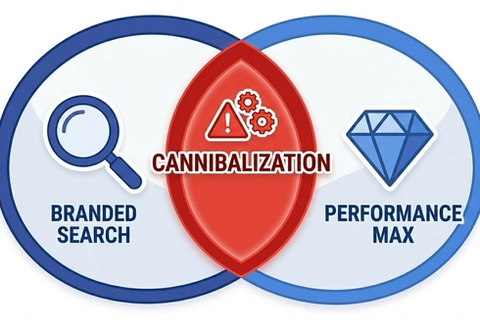
- Campaign-Level Negative Keywords: Essential for preventing PMax from cannibalizing brand traffic or bidding on junk terms.
- Brand Exclusion Lists: Ensuring the AI does not show ads on sensitive or irrelevant brand placements.
- URL Controls: Directing the AI to only send traffic to validated PPC Workhorse pages rather than the entire site.
Technical Implementation: The PPC Workhorse Operating System
Building a Workhorse system requires more than just good copy; it requires a robust technical foundation, often referred to as the "Digital Advertising Operating System" (DAOS).
Multi-Touch Attribution and Server-Side Tracking
With the decline of browser-based cookies, server-side tracking (e.g., Conversion API or GTM Server-Side) is mandatory. This ensures that conversion data is sent directly from the server to the ad platform, preserving data integrity and improving the signals used for smart bidding.
Value-Based Bidding (VBB)
In 2026, top-tier advertisers no longer bid for "leads"; they bid for "value." By assigning different values to different funnel stages—such as a demo request being worth $500 while a newsletter signup is worth $5—the marketer allows the algorithm to prioritize high-value users. This is the ultimate "Workhorse" maneuver, as it forces the paid channels to optimize for revenue rather than vanity metrics.
| Conversion Action | Estimated Value | Bidding Logic |
|---|---|---|
| Final Purchase / Deal Closed | $10,000 (Avg LTV) | Maximize Conversion Value |
| Qualified Opportunity | $2,500 | Target ROAS |
| Demo / Consultation Request | $500 | Target CPA |
| Guide Download / Lead Gen | $50 | Observation Mode |
Sample Value-Based Bidding (VBB) framework for a B2B Workhorse system.
Synthesis and Strategic Recommendations
The PPC Workhorse represents the maturation of digital marketing into a unified discipline. By integrating the precision of Google's Alpha/Beta structures, the low-cost audience building of Meta's content-first strategy, and the long-term authority of SEO topic clusters, brands can create a resilient system that thrives despite rising auction costs and data obfuscation.
The evidence from 2026 benchmarks and case studies indicates that the brands that win are those that:
- Invest in Data Quality: Treat first-party data as a competitive moat and ensure the AI models receive "clean" signals.
- Architect for Conversion: Use distraction-free, high-speed landing pages that mirror the user's intent with precision.
- Bridge the Paid-Organic Divide: Use paid search as the "R&D department" for SEO content production, ensuring every organic article is backed by conversion data.
- Embrace Agentic Workflows: Move from task execution to strategic oversight, using AI agents to manage the complexity of multi-channel media buying while maintaining human-led guardrails.
Ultimately, the Workhorse is not a static project but a continuous cycle of discovery, conversion, and authority-building. As the search and social landscapes continue to be reshaped by generative AI, the principles of relevance, focus, and data-driven synergy remain the only durable foundations for digital marketing excellence. The strategist who masters the PPC Workhorse today is not just buying ads; they are building a sustainable, defensible future for their brand.
Frequently asked questions:
What exactly is a "PPC Workhorse" and how does it differ from a standard landing page?
A PPC Workhorse is a specialized conversion engine architected for high-intent, expensive traffic. Unlike standard pages, it is designed for a single call to action and removes all distractions, such as site navigation menus. This focus improves the page's Quality Score and relevance signals, directly lowering your CPC and cost per conversion.
How does the "Alpha/Beta" campaign structure improve my SEO strategy?
The Alpha/Beta framework turns your paid search into a laboratory for organic authority. The "Beta" campaigns act as a discovery layer to identify high-converting, revenue-generating keywords. These search terms are then mapped into SEO topic clusters, ensuring your content production is based on actual revenue data rather than just search volume.
Why should I use "Content-First" ads on Meta instead of direct conversion ads?
Direct-to-conversion ads for cold audiences often result in high acquisition costs due to low intent. "Content-First" ads use educational or engagement-driven content to build retargeting pools for fractions of a cent. By retargeting only those who have engaged (e.g., watched 50% of a video), you reach a warm audience that converts at significantly higher rates.
What technical requirements make a landing page "AI-ready" for 2026?
An "AI-ready" page is designed for machine readability as much as human conversion. This requires explicit identity and purpose statements in the first 200 words, structured schema markup (FAQ, Product, or Organization), and simple, predictable formatting. This ensures AI assistants and Search Generative Experiences (SGE) can accurately summarize your offer for users.